Healthcare waste management remains a critical public health concern in Nigeria. Improper handling and disposal of medical waste can expose healthcare workers, patients, waste handlers, and communities to infectious agents, toxic chemicals, and other hazardous materials. Recent academic research has examined the implementation of Nigeria’s National Policy on Injection Safety and Healthcare Waste Management, revealing both progress and persistent challenges .
The policy, which focuses on communication and behavioral change, healthcare waste management, logistics, human resource development, and monitoring and evaluation, has achieved notable successes. These include training healthcare workers on safe injection practices, better waste management practices in many facilities, advocacy programs, development of implementation guidelines, construction and installation of waste treatment facilities, and mobilization of resources .
However, significant challenges remain. Researchers have identified inadequate training of healthcare workers, ineffective legislative enforcement, and absence of reliable data as ongoing obstacles to effective policy implementation . Moreover, stated guidelines are not strictly followed and adhered to in all healthcare facilities, creating gaps in the safety chain.
The regulatory framework for healthcare waste in Nigeria is established by the National Environmental (Healthcare Waste Control) Regulations 2021, made under the National Environmental Standards and Regulations Enforcement Agency (NESREA) Act . These regulations apply to all healthcare waste generators, handlers, and treatment facilities, establishing requirements for waste segregation, packaging, labeling, storage, transport, treatment, and disposal.
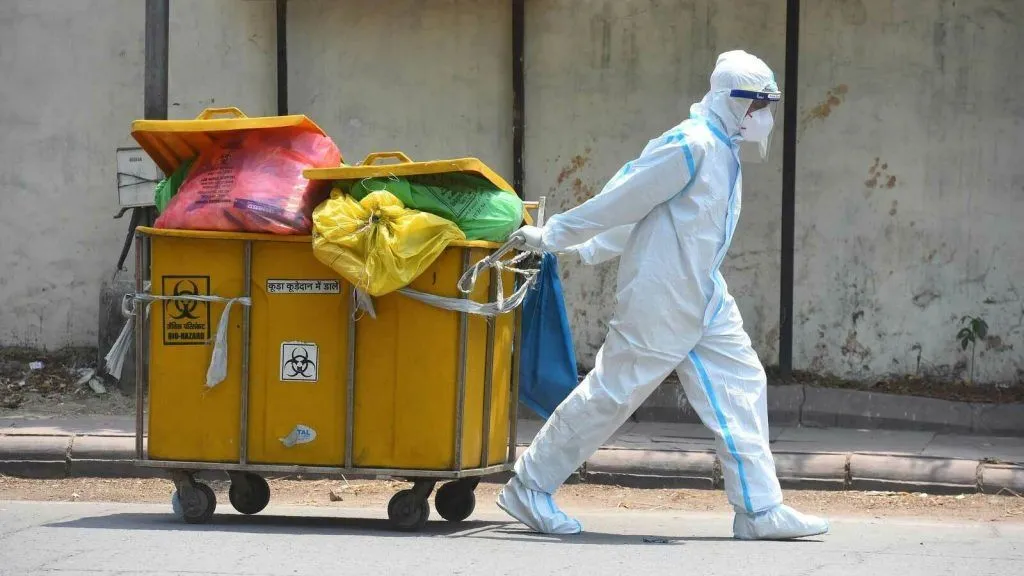
For healthcare facilities seeking to strengthen their waste management practices, several steps are essential. First, facilities must conduct regular training for all staff involved in waste handling, from point of generation to final disposal. Second, proper segregation using color-coded containers and clearly labeled bags must be consistently enforced. Third, facilities should maintain detailed documentation of waste volumes, treatment methods, and disposal destinations. Fourth, partnerships with licensed, competent waste management contractors are essential for ensuring that waste receives appropriate treatment.
At Danzuna Environmental Services Limited, we provide comprehensive medical waste handling services to healthcare facilities across Nigeria. From our base at No 5, Ada George in Port Harcourt, we serve government hospitals, private hospitals, primary health centers, clinics, and medical laboratories. Our trained collection teams use designated vehicles that meet infection control standards, and we treat all infectious waste through high-temperature incineration that destroys pathogens while controlling emissions to meet regulatory standards.
We also provide training and advisory services to help healthcare facilities develop internal waste management plans and train their staff. For more information about our medical waste management services, contact us at enquiries@danzuna.com or call +234 703 004 2741.