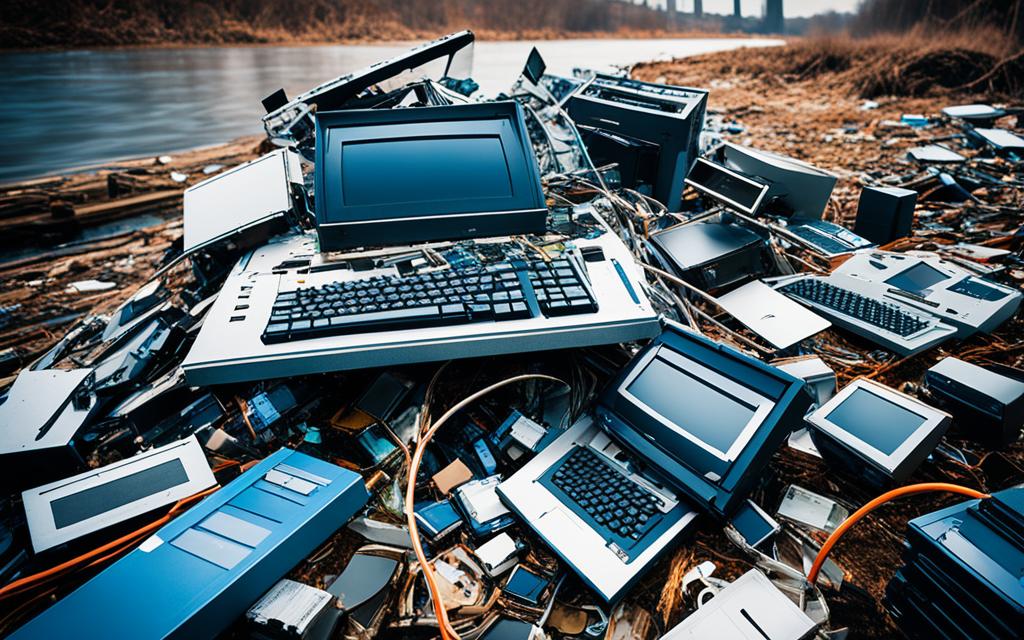
Nigeria, like many rapidly developing nations, faces a growing challenge: what to do with the mountains of electronic waste generated by our increasing dependence on technology. Computers, mobile phones, printers, televisions, medical devices, and industrial electronics all have finite lifespans, and when they reach the end of those lifespans, they become e-waste – one of the fastest-growing waste streams in the world.
The challenge of e-waste is twofold. First, electronic equipment contains valuable materials including metals, plastics, and precious elements that can be recovered and recycled, contributing to a circular economy and reducing the need for virgin resource extraction. Second, electronic equipment also contains hazardous components including lead, mercury, cadmium, and brominated flame retardants that can cause serious environmental contamination and human health problems if disposed of improperly .
When e-waste is dumped in landfills or open environments, these hazardous substances can leach into soil and groundwater, contaminating water sources and entering the food chain. When e-waste is burned – a common practice in informal recycling operations – toxic fumes are released into the air, exposing workers and nearby communities to respiratory and other health risks. Children and pregnant women are particularly vulnerable to the effects of these toxins.
The regulatory framework for waste management in Nigeria continues to evolve. The National Environmental Standards and Regulations Enforcement Agency (NESREA) has established regulations governing hazardous waste, including requirements for proper handling, transport, and disposal of electronic waste . However, enforcement remains challenging, and much e-waste continues to be handled by informal sector operators with limited environmental and health safeguards.
For corporate and institutional generators of e-waste, responsible management is not only an environmental imperative but also a matter of risk management. Electronic equipment often contains sensitive data – customer information, financial records, proprietary business data – that must be securely destroyed before equipment is discarded. Simply deleting files or reformatting hard drives is insufficient; data recovery tools can easily retrieve supposedly erased information. Physical destruction of storage media is the only truly secure approach.
At Danzuna Environmental Services Limited, we provide responsible e-waste management and recycling services to corporate, industrial, and institutional clients across Nigeria. Based at No 5, Ada George in Port Harcourt, our process begins with a site assessment to inventory and characterize your electronic waste. We then arrange secure collection and transportation to our processing facility, using equipment and procedures that prevent damage and release of hazardous materials.
At our facility, e-waste is sorted, dismantled, and segregated into component materials. Valuable materials are recovered and directed to responsible recyclers. Hazardous components are carefully removed and sent to specialized treatment facilities that can handle them safely. For corporate clients, we provide certified data destruction services including hard drive shredding and degaussing, with certificates of destruction provided for your records.
Responsible e-waste management protects your organization from environmental liability, safeguards your data, demonstrates corporate social responsibility, and contributes to a more sustainable future. To learn more about our e-waste management services, contact us at enquiries@danzuna.com or call +234 703 004 2741.

 Danzunaltd@gmail.com - On